
A door closer slamming needs an assessment of the complete doorway, not an automatic turn of an adjustment screw. Changes in speed can involve the closer, mounting, hinges, latch, or building pressure. Keep people clear of an uncontrolled door and arrange qualified inspection without obstructing required exit access.
For Scottsdale storefronts and offices, a sudden slam can affect customers, staff, and hardware. This guide helps a business manager record useful symptoms and coordinate a repair; it does not provide adjustment instructions for unidentified equipment.
Door closer slamming: describe when it happens
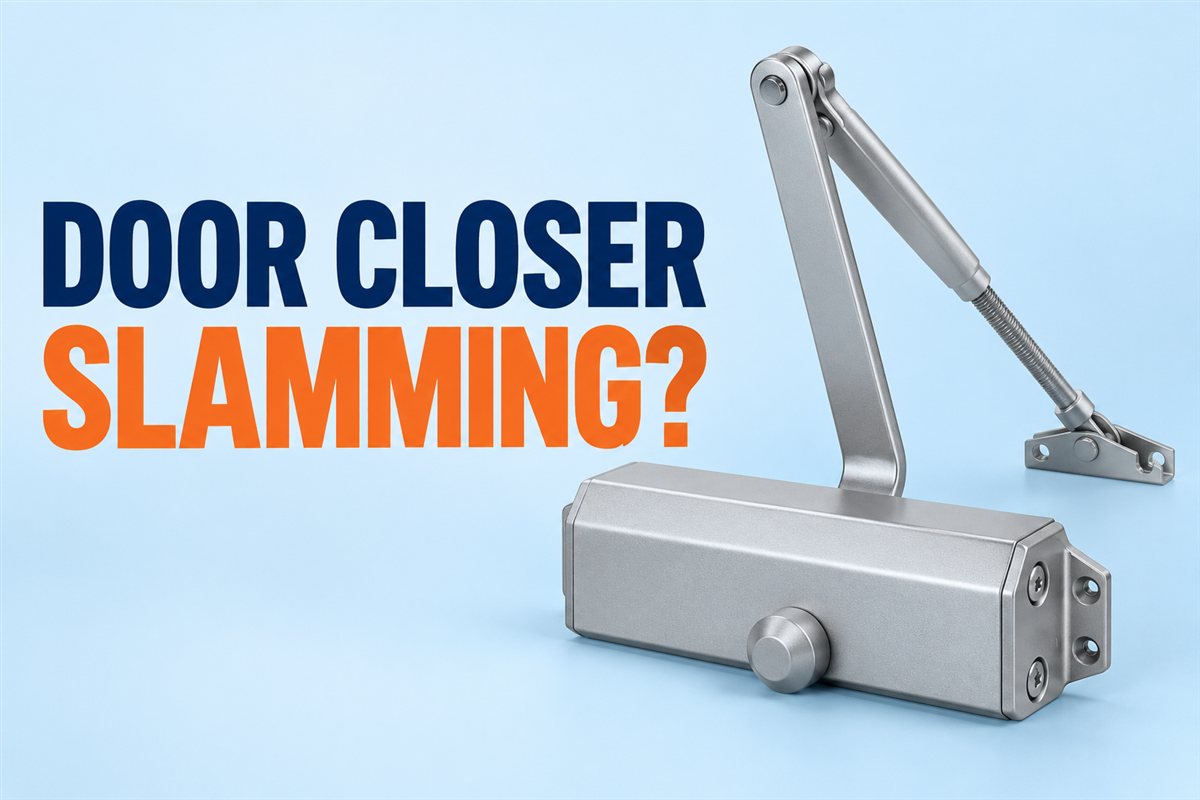
An overhead closer uses controlled movement to return a manually opened door toward its closed position. The main closing portion and the final movement into the latch may be controlled separately. A door that swings too fast for its whole travel gives different information from one that moves normally and bangs only at the end.
Observe from a safe position. Does it happen during every cycle or only when another entrance opens? Has the problem followed weather stripping, a door replacement, painting, or ventilation work? Note these details rather than asking staff to repeatedly demonstrate an uncontrolled swing near customers.
| Observed pattern | What deserves inspection | Manager’s useful note |
|---|---|---|
| Fast movement through most of the closing cycle | Closer condition, configuration, and installation | When the change began |
| Normal movement followed by a final bang | Final closing action and latch/strike relationship | Whether the latch actually engages |
| Intermittent behavior with other doors or ventilation | Pressure conditions and the door assembly | Which conditions coincide with the symptom |
| Visible oil, loose arm, or unusual movement | Possible closer or mounting failure | Photograph from a safe location and report promptly |
What staff can safely document
Record the door location, visible closer model, opening direction, and the area affected by the swing. Photograph the intact hardware if it can be done without a ladder or entering the swing path. Include whether the door latches, rubs, or sticks, and whether anyone has already adjusted it.
Do not remove the arm, loosen mounting points, drain fluid, or experiment with unidentified valves. Closer designs differ. A change that reduces the noise may also stop the door from closing or make opening harder. If the door is uncontrolled, coordinate a safe interim arrangement with the property manager while retaining necessary exit access.
Allegion’s closer overview explains the different closing functions. Its door hardware guide also places closers within the wider door assembly. These resources support inspecting operation as a whole rather than treating silence as the only goal.
Adjustment, repair, or replacement?
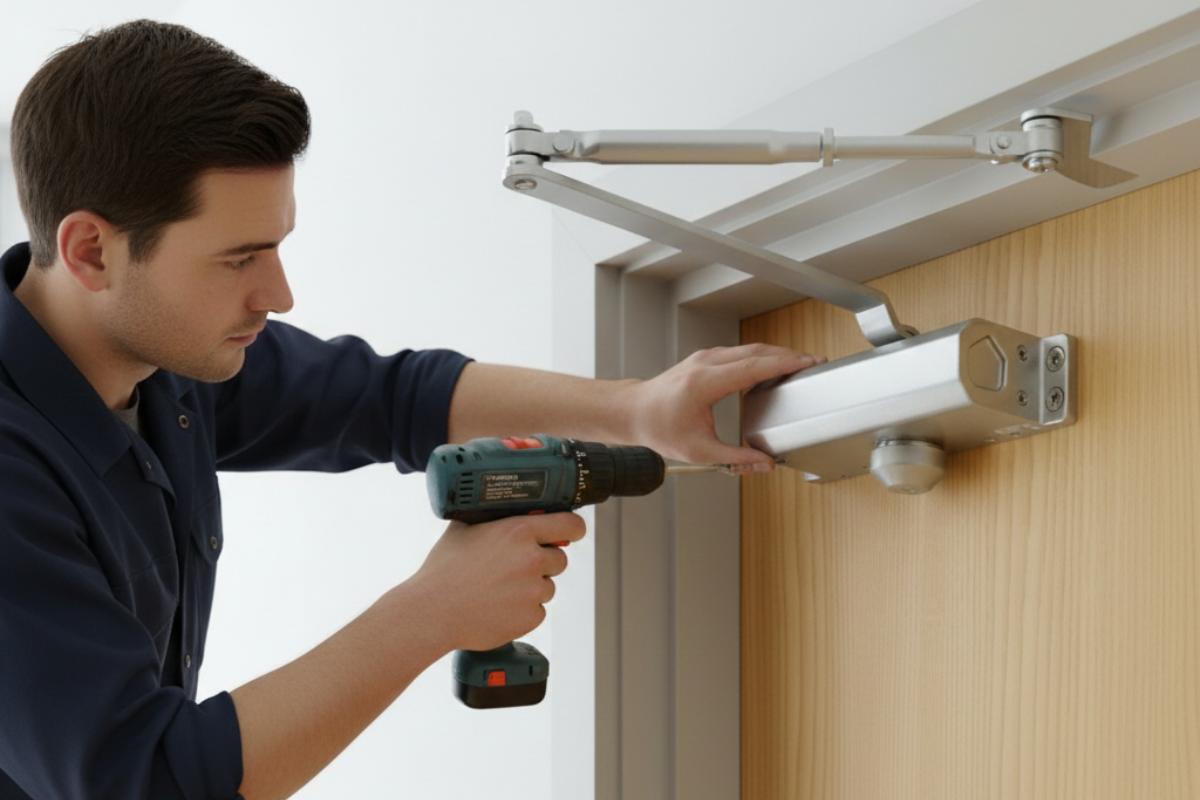
The right choice depends on what the inspection finds. A suitable intact closer may need proper setup. Loose or unsuitable mounting requires attention to the installation. A leaking or damaged unit may need replacement. Hinges, door drag, and latch resistance can continue to affect the result even after a closer is changed.
Scottsdale Lock & Key lists automatic door closer installation. Explain that your existing door is slamming and confirm whether assessment, adjustment, or replacement is available for that closer. A listed installation service does not by itself establish support for every existing product.
Why the final latch matters
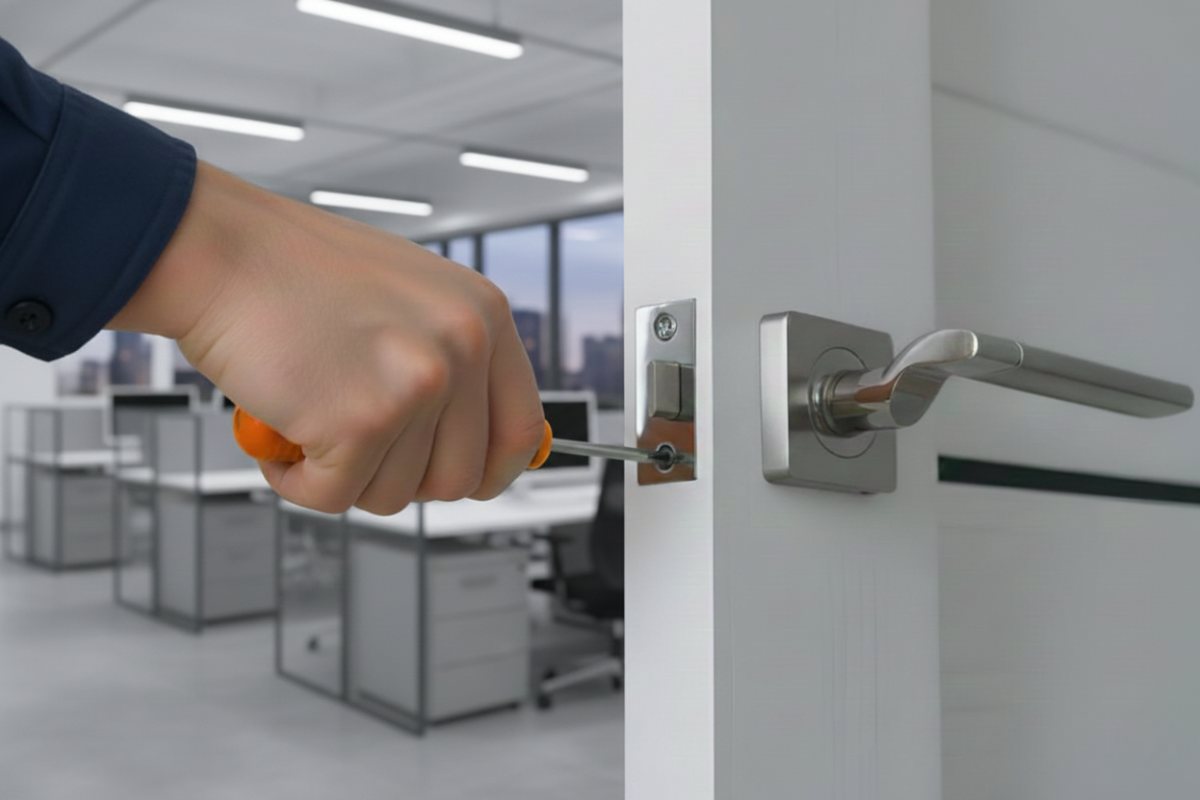
A quiet door that rests short of the strike has not necessarily been repaired successfully. The technician should evaluate the intended closing and latching functions alongside reasonable operation. If the lock is damaged, discuss the separate scope of commercial lock replacement instead of assuming a closer will fix all hardware faults.
Coordinate the work with the building manager
- Identify the person authorized to approve work on the entrance.
- Describe the closer and any connected access-control equipment.
- Report recent door, frame, flooring, or ventilation changes.
- Ask how customer access and deliveries will be managed during service.
- Agree on the estimate, proposed parts, and final operational checks.
Fire-rated doors and accessible routes may have specific requirements. The responsible building professional should verify the rules that apply to that opening and jurisdiction. Do not wedge a required closing door open or add improvised hardware as a noise solution. This article does not establish code compliance for any individual doorway.
An example of a complete repair question
Illustrative example, not a reported company job: A shop manager notices the door moves normally until the final few inches, then slams but occasionally fails to latch. A useful request asks for closer and latch assessment together. Simply slowing everything down could mask the bang while leaving unreliable closure.
Review the commercial locksmith services and explain any related access-control work in the same request. For a property in Scottsdale, confirm the visit scope and product support before arranging access. Keep the service record and document any remaining intermittent behavior after the agreed work.
Five reporting checks for a door closer slamming
1. Identify the opening, not just the product
Use the building’s door identifier or a clear location such as the main storefront entrance or rear corridor door. Explain who normally uses the opening and whether the affected swing reaches customers or staff. The provider needs the setting as well as the closer model to understand the service request and plan access.
A door closer slamming on a shared entrance may involve a manager who is not present when the symptom occurs. Identify the authorized contact early. Staff can provide observations without becoming responsible for approving unfamiliar hardware changes. Keep the complaint and approval route together so the visit addresses the correct opening.
2. Describe the portion of travel that changes
State whether movement appears fast through most of the closing cycle or whether the final approach produces the impact. Include whether the latch engages afterward. Those distinctions make the report more useful than a general statement that the door is noisy. Describe ordinary observations without asking people to stand near an uncontrolled swing for another demonstration.
If a door closer slamming is intermittent, record the conditions already noticed. Another entrance opening, ventilation changes, or recent work can be relevant history without proving a cause. Keep the observation separate from a proposed adjustment. The technician needs the actual equipment and environment before deciding what response suits the opening.
3. Preserve the known installation history
Provide existing product information, prior invoices, and any record of earlier adjustment. State what is known about the timing and result rather than guessing the position of a valve. If the symptom began after changes to seals, flooring, or the door itself, include those details. The sequence can guide inspection without assigning responsibility before findings are available.
Photograph intact equipment only where the view is safely accessible. You do not need to remove the arm or mounting hardware to prepare the request. Visible oil or loose-looking parts should be reported alongside the movement change. Do not interpret a photograph as confirmation that only one component needs attention.
4. Connect the noise complaint to latching
Ask the provider to consider the intended closing and latching behavior together. A quieter final movement may still leave the opening short of its strike. Tell the technician if the door also rubs, sticks, or fails to remain engaged. Those observations help keep the service scope connected to the complete complaint.
For a door closer slamming at an electronically controlled entrance, explain which other equipment is present and who manages it. Do not change permissions or disconnect a device to test a theory. The responsible manager can coordinate the appropriate providers if the assessment identifies work outside the closer service itself.
5. Confirm who approves the next step
Ask what the assessment includes and how a recommendation for additional work will be presented. Clarify who can approve parts or another contractor’s involvement if the original contact is unavailable. A general request to reduce noise should not become an unexplained order for every component on the opening.
If replacement is recommended, ask what finding makes that option appropriate and how the proposed unit suits the door. Similar appearance does not establish selection or mounting suitability. Retain the product information and the explanation of what existing hardware will remain. This gives the manager a clearer basis for approving the work.
Compare proposals by their intended result
A door closer slamming assessment can lead to different scopes depending on the finding. One proposal may concern an intact product’s setup; another may address damaged equipment or installation. Ask each provider to explain which observed condition it intends to correct. A price comparison is incomplete when the proposals describe different work.
Confirm assessment charges, parts, labor, and agreed checks where applicable. Ask how recommendations concerning hinges, door fit, or latching will be handled and whether another visit is needed. Keep any excluded condition visible in the record instead of assuming it was repaired because the closer received attention.
Keep optional upgrades separate
A manager may also prefer a different appearance, new access features, or a broader hardware upgrade. Describe those preferences separately from the immediate complaint. Ask which work follows from the inspection and which is optional. The approved scope should make the distinction clear so the final result can be evaluated against the actual request.
Discuss customer access and delivery arrangements with the responsible manager before the appointment. Temporary workflow decisions should account for the role of the opening and existing building procedures. Do not treat an improvised prop or restraint as part of the repair plan merely because it reduces the impact noise.
What to record when work is completed
Ask for the findings, product identification, completed work, and remaining limitations. The handover should describe the functions checked, including intended closing and latching within the agreed scope. Keep the manufacturer’s applicable instructions with the service record so later staff do not rely on an undocumented setting change made from memory.
Tell the authorized manager who received the explanation and which follow-up item remains open. If another trade needs to address a condition, record the responsible contact and next step. A useful record supports future service without presenting a successful closing cycle as a general certification of every requirement for the opening.
Use one record if the behavior returns
If a door closer slamming complaint recurs, compare the present pattern with the original report. State whether the fast movement concerns the same part of travel, whether latching remains reliable, and what conditions coincide with the change. Include the service date and any later approved work or impact.
Avoid another round of undocumented adjustments before discussing the recurrence. Keep people clear of an uncontrolled door and coordinate the response through the responsible manager. Several staff may observe the opening, but one factual record makes the follow-up request easier to assess than conflicting guesses about the cause.
Update the provider if the scheduled access window or approval contact changes. Have the known product details available and explain any restriction that affects inspection. The appointment can then proceed from the actual condition and current authorization rather than an outdated message passed between shifts.
Retain revised estimates alongside the original request. If the inspected condition changes the recommendation, confirm the new scope before approval and keep the explanation available to the building manager. This allows the final invoice and any outstanding task to be understood without relying on a verbal message that may be lost between appointments or staffing changes.
Frequently Asked Questions
Is a slamming door always caused by a bad closer?No. A closer is one part of a door assembly that also includes hinges, mounting, the frame, and latching hardware. Building pressure can influence behavior as well. Describe the full pattern so the inspection can consider those interactions. Replacing the closer without identifying contributing conditions may leave the problem unresolved. |
Can staff turn the adjustment screws until the noise stops?Avoid trial-and-error adjustment on an unidentified unit. Valve functions, permitted ranges, and setup requirements differ between models. An apparently quieter result can leave unreliable closure or other operating problems. Keep the product details available and ask a qualified person to use the correct manufacturer instructions for that installation. |
What does visible oil around the closer mean?It may indicate leakage and warrants prompt inspection, especially if the door has also become uncontrolled. Do not open the closer body or assume adding fluid is an appropriate repair. Photograph the condition safely, report the change in operation, and ask whether the unit requires replacement after assessment. |
Should we prop the door open until it is repaired?Do not use an improvised prop as a general solution, particularly where the door has a required closing function. Coordinate interim arrangements with the responsible building manager and maintain required exit access. The correct response depends on the opening, its role, and the conditions affecting staff and visitors. |
Why does the door slam only when another door opens?That pattern can help identify pressure or airflow effects, although it does not prove the cause. Record which opening or ventilation condition coincides with the change. Share the information with the building manager and service provider so they can assess the environment along with the closer and hardware. |
Does a slower closing door mean the repair is successful?Speed alone is insufficient. The door should perform its intended closing and latching functions, and the applicable opening requirements should be considered. Ask what final checks are included. A door that stops short of latching or requires unusual effort still needs attention even if the impact noise is reduced. |
Can the same closer be used on every storefront door?No. Selection depends on the door, mounting arrangement, use, environment, and other requirements. Give the provider the door and closer details rather than ordering solely by appearance. Ask how the proposed product suits the opening and what existing hardware will remain in the completed installation. |
Is this article a compliance inspection?No. General troubleshooting guidance cannot establish whether an individual opening satisfies applicable fire, accessibility, or building requirements. The property manager should coordinate with qualified building professionals and the relevant authority where necessary. Any proposed hardware change should be assessed for the particular doorway before it is approved. |
What should I tell the service provider about prior adjustments?Describe who adjusted the closer, when the work occurred, and what changed afterward if that information is known. Avoid guessing at valve positions or trying to restore settings from memory. The technician needs the actual product and operating conditions to assess a suitable configuration and any damage. |
What should a business keep after service?Retain the product information, approved scope, service record, and any maintenance instructions provided for the installation. Note the results of the agreed operational checks and report recurring symptoms with dates and conditions. This helps future service decisions rely on observed behavior rather than repeated unrecorded adjustments. |
Final Thoughts
A door closer slamming calls for controlled operation and reliable latching together. Record the pattern, keep people out of an uncontrolled swing, and confirm the inspection scope before approving parts.
Call Scottsdale Lock & Key at (480) 660-6454 or contact the team to confirm service scope, compatibility, and current availability.