
If your key won’t turn in ignition, stop forcing it. Confirm that you have the correct intact key and follow your vehicle’s owner manual for the parked vehicle and steering lock. Persistent resistance can come from the key or cylinder; electrical starting faults require a different diagnosis.
For drivers in Scottsdale, the useful first distinction is between a key that physically cannot rotate and an engine that will not start after the key turns. This guide covers conventional keyed ignitions, not push-button starting systems.
Key won’t turn in ignition: identify the exact symptom
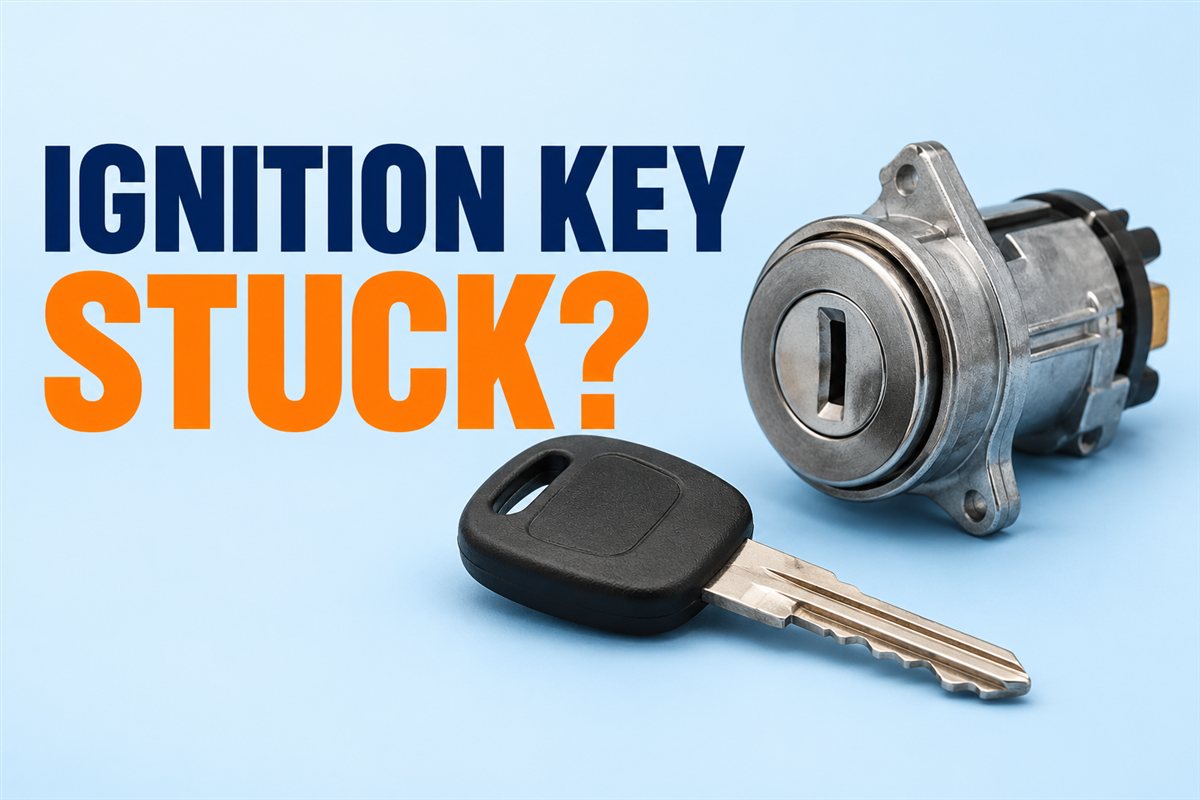
A mechanical ignition cylinder accepts the key and allows rotation when the correct components align. The electrical ignition switch is a separate part of the starting system, although the assemblies may connect. A symptom alone cannot prove which component needs replacement.
Describe the last normal start and the first failed attempt. Did the key enter fully? Did it rotate partway? Was the steering wheel under tension after parking? Does a known working spare behave differently? These observations help narrow the inspection without taking the steering column apart.
| Observation | What it may suggest | Useful next step |
|---|---|---|
| One key resists; an intact spare turns normally | A worn, damaged, or incorrectly cut key | Have the key assessed before ordering an ignition assembly |
| Both keys resist in the same position | Cylinder wear, steering-lock load, or another mechanical issue | Consult the model manual and request an inspection |
| Key turns normally but engine does not start | A different starting or authorization problem | Report lights, sounds, and warning messages |
| Key is cracked, bent, or partly broken | Risk of breakage inside the cylinder | Stop using it and ask about key assessment or extraction |
Safe observations before requesting service
Park securely and follow the vehicle manual, including the correct transmission position. Check the key visually in good light. Do not straighten a bent blade, turn it with pliers, hit the cylinder, or spray an unidentified product into the ignition. Additional force can turn an intermittent problem into a broken-key problem.
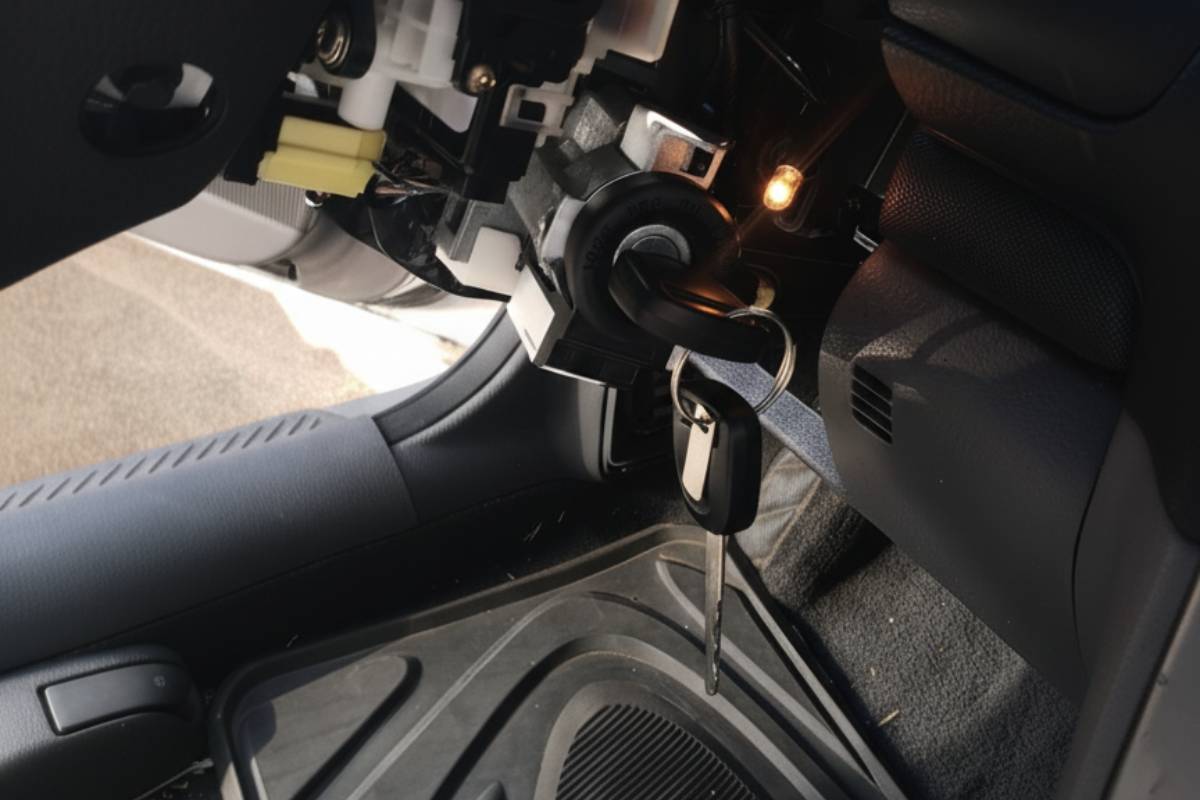
Some vehicles have a steering lock that can load the ignition after parking. Instructions vary by model; use the procedure in your own manual and stop if ordinary gentle operation does not work. A historical Ford owner guide illustrates this type of interaction, but it is not a universal procedure for every car.
If you already have an undamaged spare that belongs to the vehicle, tell the technician how it behaves. A door-opening key may not be a programmed starting key. Do not assume that physical appearance or a successful door unlock establishes starting compatibility.
Why a key problem does not always mean ignition replacement
A worn blade and worn cylinder can produce similar resistance. An inspection should consider both before a repair is selected. Replacing the wrong part can leave the original symptom unresolved. Ask what findings support the recommendation and what testing will follow the work.
Scottsdale Lock & Key lists ignition repair and ignition switch replacement as separate services. Explain the mechanical symptom when requesting help and confirm support for the year, make, model, and key type. A listed service does not establish universal vehicle coverage.
If the key breaks during an attempt
Leave the remaining fragment in place and retain any loose piece. Avoid glue, hooks, or improvised extraction tools. The company also lists automotive broken-key extraction; confirm whether that service fits the vehicle and location.
What to prepare for an automotive locksmith
- Vehicle year, make, model, and whether the ignition uses a metal key.
- Whether the key enters, rotates partially, or does not move at all.
- Whether another authorized key works and whether any key is damaged.
- The location and safe access conditions for the parked vehicle.
- Any recent ignition work, attempted repair, or starting warning message.
Have proof of ownership or authorization available and ask which documents are needed in your circumstances. Confirm diagnostic charges, possible parts, programming requirements, and approval steps before work starts. Share identification through the provider’s agreed process rather than posting it publicly.
An example of a useful service description
Illustrative example, not a reported company job: A driver says the regular key enters but will not rotate, while an intact spare works smoothly. That comparison supports checking the regular key before replacing the entire ignition. If both keys resist, the inspection should expand. Neither observation establishes the final repair without examining the vehicle.
For a visit in Scottsdale, use the automotive locksmith service information to describe the needed work. Do not authorize a repair solely from a generic online symptom list.
Five reporting checks when a key won’t turn in ignition
1. Describe the first failed movement
Make the first sentence about rotation rather than the general phrase that the car will not start. State whether the blade enters fully, whether it begins turning, and where normal movement ends. Use what you already observed. Repeating forceful attempts is unnecessary and can change the condition that the provider needs to assess.
When a key won’t turn in ignition, the sequence matters more than a guessed part name. A cylinder replacement, a new key, and an electrical starting assessment address different findings. Give the provider enough information to distinguish those needs before requesting a particular component. If you are uncertain about the position, say so rather than forcing another attempt.
2. Establish which key is the reference
Explain whether the key has previously started this vehicle and whether another authorized key is available. An unfamiliar replacement that resembles the original is different from a daily key that recently began resisting. Preserve any undamaged working spare and tell the provider how it behaved during ordinary use. Do not treat appearance as a compatibility check.
If only one blade resists, report that comparison without declaring the cylinder faultless. If every known key meets resistance, explain that too. The inspection still needs to consider the actual equipment. A successful start with one key is useful history, while repeated attempts with a damaged blade add little to the service description.
3. Identify the vehicle and prior changes
Provide year, make, model, and the conventional keyed starting arrangement. Mention a replacement ignition, earlier key work, or an aftermarket system if known. Existing service records may clarify what is installed. Ask which information the provider needs to confirm support rather than assuming that a general brand listing covers every configuration.
A key won’t turn in ignition request should identify the present location and whether the vehicle can be accessed safely. Controlled parking areas, gates, or limited work windows may affect the visit. Give those details before dispatch. Keep identity and ownership documents within the provider’s agreed verification process, rather than including them in public photographs.
4. Separate normal manual instructions from repair
Use the correct owner manual as the reference for the ordinary parked condition and steering-lock arrangement. A procedure for a different vehicle is not a reliable substitute. If normal documented operation does not resolve the situation, preserve the condition and ask for an assessment. Do not make an unfamiliar release point or forceful technique part of routine use.
Record whether the problem followed parking with steering load or appeared after another event. That history can be relevant without proving a cause. The provider needs the observed conditions alongside the vehicle details. Avoid removing covers, applying an unidentified spray, or adjusting unrelated components to test an explanation found online.
5. Confirm the assessment and approval route
Ask whether the provider can evaluate the reported mechanical symptom for the identified vehicle and at its location. Confirm authorization requirements, diagnostic scope, and how additional work is approved. If another specialist may be required, ask what finding would lead to that recommendation. A listed service is a starting point for this discussion, not a parts guarantee.
When a key won’t turn in ignition, explain who owns the vehicle and who can authorize work if those people are different. A rental, fleet, or borrowed vehicle can require coordination before the appointment. Establish the responsible contact early so the assessment does not stop because the person present cannot approve the proposed next step.
Compare recommendations by the symptom they address
A proposal should identify the finding behind the suggested work. Ask how a new key, cylinder repair, or another recommendation relates to the original rotation complaint. Keep any separate starting problem visible as a separate item. A key that turns after service and an engine that starts are related outcomes, but the agreed scope should explain which functions are included.
If parts are proposed, ask about compatibility, existing-key use, and applicable electronic requirements before purchasing them. A similar-looking item is not proof of suitability. Clarify the policy on customer-supplied equipment and what happens if it is unsuitable. Keeping the purchase connected to the inspection reduces the chance of approving an unrelated component.
Ask how findings outside the original scope are handled
Confirm who receives a revised recommendation and whether another appointment or facility is needed. An initial visit may establish the next step without completing every repair. Request a clear explanation of any limitation, including a vehicle condition outside the provider’s supported work. Keep that information with the original request so it is not lost between appointments.
Do not compare quotations solely by a starting figure. Ask what diagnosis, parts, key work, and testing each proposal includes. Use the same factual description with each provider. A quote for a replacement key and a quote for mechanical ignition work cannot be assessed fairly without understanding the different findings and intended outcomes.
Make the handover demonstrate the agreed result
Ask the technician to identify what was assessed and what changed. The service record should distinguish key work from cylinder or switch work and state any remaining recommendation. Discuss the applicable normal starting, shutdown, and removal functions for the actual vehicle. A handover should explain the result rather than rely on an undocumented technique that works once.
If more than one key is supplied, identify and verify each according to the agreed scope. Keep damaged or uncertain keys separate until their status is explained. Tell other authorized drivers which equipment is confirmed for use and what issue, if any, remains unresolved. Retain the invoice and product information for future assessment.
If resistance returns after service
Report the service date, the key involved, and whether the new symptom matches the original sequence. State whether the key enters, rotates partway, or remains stationary. Include any later impact or approved work. Stop forceful attempts rather than introducing another repair that could obscure the comparison with the earlier finding.
Contact the responsible provider with those facts and the existing record. Intermittent operation deserves an accurate history even if the vehicle starts again before the appointment. A clear comparison helps determine the next assessment without treating one successful rotation as proof that every contributing condition has disappeared.
Keep appointment arrangements current. If the car is moved, a working key is located, or the authorized owner cannot attend, notify the provider before dispatch. Confirm the revised scope rather than continuing with an outdated description of the situation.
Frequently Asked Questions
Can a key wear out before the ignition does?Yes. Daily use can change a key blade enough to affect operation, but cylinder wear can create similar symptoms. A technician should compare the key and cylinder rather than assume one is responsible. Keep an intact original or reliable spare available for inspection, and do not copy a visibly damaged key without discussing its condition. |
Should I keep trying if the key sometimes turns?Repeated resistance is a reason to arrange assessment before the next trip. Occasional operation does not prove the issue has cleared, especially if the key is visibly damaged. Avoid adding force to obtain one more start, and explain how often it happens and whether the resistance occurs at the same point. |
Is an ignition cylinder the same as an ignition switch?No. The cylinder is the mechanical part that accepts a conventional key. The switch controls electrical functions and may be connected to that cylinder. The assembly differs between vehicles. Ask the technician to identify the component involved and explain why its repair or replacement addresses the reported symptom. |
Will a key that opens my car door necessarily start it?No. Mechanical fit and electronic starting authorization are separate requirements on many vehicles. A replacement may need the correct blade and compatible electronic components as well as programming. Tell the provider whether the key has ever started that vehicle; a newly acquired key should not be treated as a proven diagnostic reference. |
Can I order an ignition cylinder before inspection?Discuss compatibility before buying parts. Fit, keying arrangements, security components, and installation requirements vary by vehicle. A part sold for a similar model may not resolve your problem. Ask whether customer-supplied parts are accepted and whether inspection should happen first so the diagnosis drives the purchase. |
What if the car starts after I use the spare?That is useful evidence, but it is not a complete inspection. Preserve the spare and stop relying on the key that binds. Ask about assessing the worn or damaged key and checking cylinder operation. Avoid waiting until every working key has failed before arranging a suitable replacement. |
Can a locksmith work on every vehicle ignition?Coverage depends on the vehicle, equipment, parts, and the service provider. Give the exact year, make, model, and key system before booking. Confirm that the requested work can be performed at the vehicle location and ask what circumstances might require another specialist or a different service arrangement. |
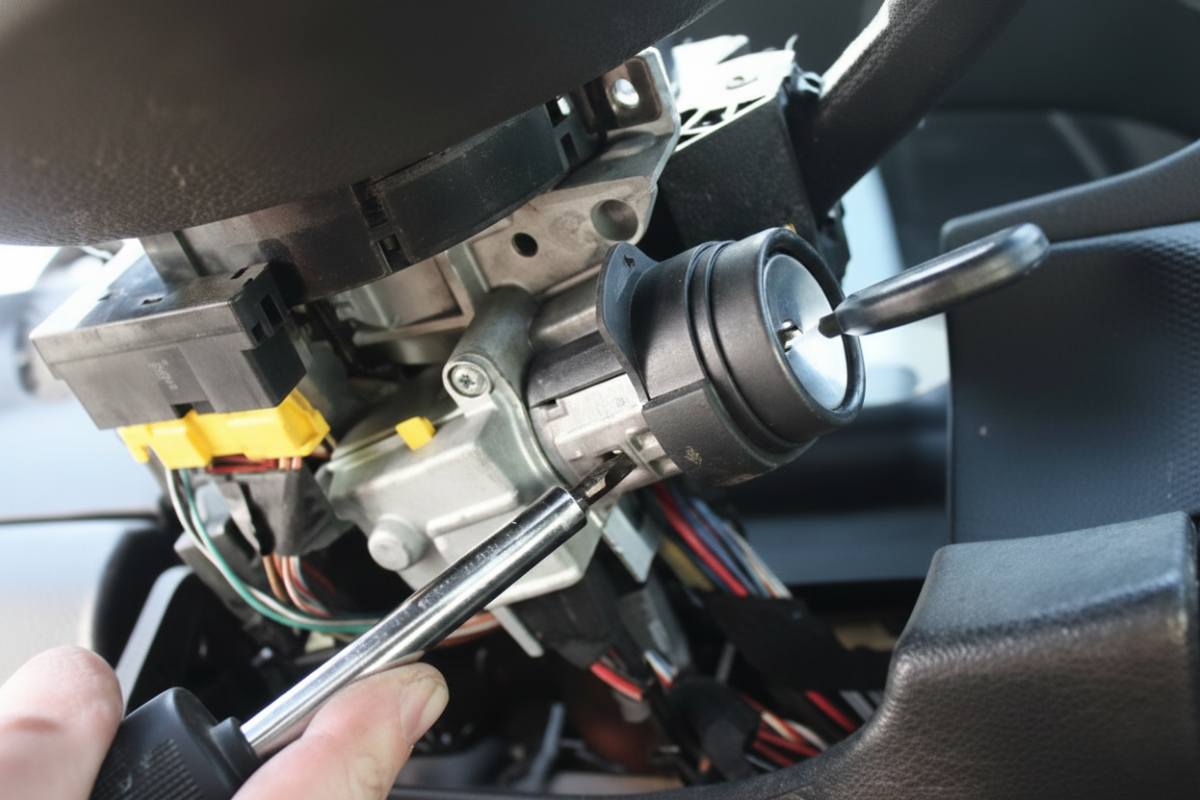
Do I need to remove the steering-column cover?No disassembly is needed to report the symptoms described here. Leave covers and security components in place for a qualified technician. Steering-column assemblies can include sensitive electrical and safety equipment. Photographs of the intact ignition area and the key type may be helpful if the provider requests them. |
How should I describe a key that turns but will not start the engine?Say that the key rotates normally and describe what happens next, such as silence, a click, cranking, or a warning message. Those symptoms belong to a different diagnostic path from a key that physically cannot rotate. Do not request an ignition-cylinder replacement solely because the engine does not start. |
What should I confirm before authorizing ignition work?Ask about vehicle compatibility, inspection findings, the proposed parts, key and programming implications, and the full estimate approval process. Also confirm what documents establish your authority to request the work. Request a final test of the agreed functions and retain the service record for any future starting or key issue. |
Final Thoughts
If your key won’t turn in ignition, preserve the key and stop forceful attempts. A precise symptom description helps separate key wear, cylinder resistance, and a different starting problem.
Call Scottsdale Lock & Key at (480) 660-6454 or contact the team to confirm service scope, compatibility, and current availability.